

Stop the Silent Damage in Your Estate Landscape
A lawn can look green from the street and still be in trouble underneath. Roots can be weak, soil can be tired, and water can be going in all the wrong places. For large Lafayette estates, those hidden problems show up as thin turf, heavy weed pressure, and ongoing repair work.
Our heat, humidity, heavy rain, and clay-heavy soils make small mistakes grow into big issues. Water sits where it should not, fungus spreads fast, and the wrong plants struggle. In this guide, we will walk through common estate landscaping mistakes that quietly damage Lafayette lawns and how smarter care can protect your property.
Watering Habits That Stress Your Turf
One of the fastest ways to hurt a high-end lawn is with poor irrigation habits. Many property managers set the controller one time and never touch it again. The lawn then gets the same schedule in spring, summer, and fall, no matter how much rain comes.
Common watering mistakes include:
- Running sprinklers on a fixed schedule, even after big storms
- Watering every day for a few minutes, instead of less often and deeper
- Letting overspray hit driveways, walkways, and walls
Summer timing makes a big difference too. When sprinklers run in the late afternoon or at night in Lafayette’s humid air, grass blades stay wet for hours. That long leaf moisture can invite fungus and disease. Deep, less frequent watering in the early morning usually supports stronger roots and a healthier lawn.
On large estates, not every area needs the same amount of water. Sunny front lawns, shaded back areas, and plant beds all have different needs. Smarter systems use:
- Separate zones for sun and shade
- Smart Controllers that pause watering after storms
- Seasonal schedules that change as daylight hours shift
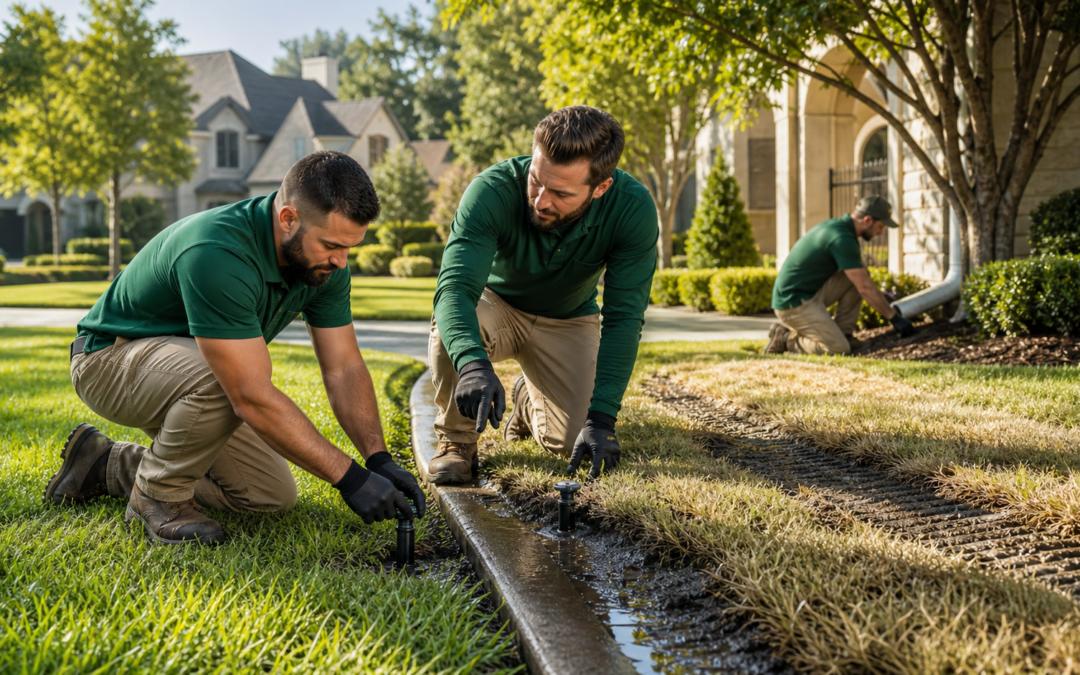
Regular irrigation checks by a professional team can catch broken heads, clogged nozzles, and poor coverage before they damage turf.
Wrong Grass and Plants for Lafayette Heat and Soil
Many properties are planted for quick curb appeal, not for long-term success in Lafayette conditions. When turf or shrubs are chosen mainly for color or style, they often struggle once the real heat and humidity settle in. Add our clay-heavy soil and the occasional drought conditions, and weak plants start to fail.
Problems that show up with the wrong plant choices include:
- Brown or thin spots that never quite fill in
- Repeated fungus or pest problems
- Constant replacements in the same areas
Big estates often mix wide, sunny lawns with shady spaces under large trees and high-traffic paths near pools or patios. Having only lawn across all those spots usually leads to patchy, weak grass. Some areas get too much shade, and some are simply walked on too often.
A better approach is a regionally smart plant palette that respects microclimates across the property. That means:
- Matching green spaces to sun, shade, and traffic levels
- Save turf grasses for open sunny areas, not shaded or crowded corners
- Selecting ground covers, shrubs and ornamentals that handle shade soil
- Grouping plants with similar water needs in the same zones
With the right plant varieties and turf grasses for Lafayette conditions, lawns and landscapes keep better color, handle stress more easily, and require less replacement and repair over time.
Drainage Problems That Build Into a Crisis
Drainage issues rarely start as a major disaster. They show up slowly, as that one soggy low spot that never seems to dry out, or those muddy tracks along a side yard after every heavy rain. In our clay soils, water often sits on top rather than soaking in, and grass roots can suffocate.
Standing water leads to:
- Root rot and thinning turf
- Mosquito trouble in warm, still puddles
- Muddy areas that track onto hard surfaces
On larger residential and commercial properties, runoff can also move in ways that are hard to see at first. Water might flow toward a building foundation, across a driveway, or into a neighbor’s yard. Over time, that runoff can wash out plant beds, expose roots, and loosen hardscapes.
Thoughtful drainage design works with the whole property, not just a single wet spot. Helpful tools include:
- French drains to move water away from problem areas
- Swales that gently guide flow across the lawn
- Dry creek beds that look attractive and handle heavy rain
- Subtle regrading to correct low spots and improve flow
When drainage is planned alongside overall design, your lawn, beds, and structures all stay better protected from slow, hidden damage.
Trees, Beds, and Lawns Fighting for Space
Mature trees like oaks and magnolias are a big part of the feel of many Lafayette estates. Over time, though, their shade and root systems change the way your lawn grows. Grass that started out thick under a young tree can thin as the canopy spreads and roots compete for water and nutrients.
You may see:
- Bare or thin rings of turf under trees
- Uneven color where shade has increased
- Roots pushing up near the surface
Mulch and planting beds can create problems too. When mulch creeps up against trunks, it can trap moisture where it should not be. When bed edges slowly expand, they steal space from your lawn and make mowing lines messy. Burying the root flare of a tree, where the trunk widens at the base, can stress even strong trees over time.
A more strategic approach keeps everything in balance:
- Professional canopy thinning to let more light reach the turf
- Correct mulching that keeps material away from trunks and root flares
- Clear, consistent bed lines that respect both trees and usable lawn space
This kind of tree and bed care supports healthy grass, protects mature trees, and keeps the whole property looking polished and intentional.
Reactive Care Instead of Planned Maintenance
Many estates slip into a pattern of reacting instead of planning. Help is called only when brown patches, weeds, or insect damage are already obvious. By that point, the issue is often spread across large sections of the lawn, and recovery takes longer and uses more resources.
Key parts of lawn care that often get skipped or done inconsistently include:
- Timed fertilization based on turf type and season
- Core aeration to relieve compaction in clay-heavy soil
- Overseeding in select areas where the lawn needs thickening
- Pre-emergent weed control before problem weeds show up
On large properties, all of this needs to be coordinated around Lafayette’s seasonal rhythm. Spring is for building strength, summer is for managing heat, humidity, and heavy storms, and fall is for recovery and prep before the next growing cycle.
A proactive, year-round maintenance plan that is tailored to estate-scale residential landscaping in Lafayette, LA keeps small issues from turning into full lawn failures. It also helps irrigation, drainage, plant health, and tree care all work together instead of against each other.
By paying attention to these quiet mistakes and choosing thoughtful, local-focused care, you protect both the beauty and the long-term value of your Lafayette estate.
Get Started With Your Project Today
If you are ready to transform your yard into a space you truly enjoy, our team at EdenScapes is here to help. Explore how our residential landscaping in Lafayette, LA can be tailored to your property, style, and budget. Tell us about your vision and we will provide a clear plan and next steps. To schedule a consultation or ask questions, simply contact us.