

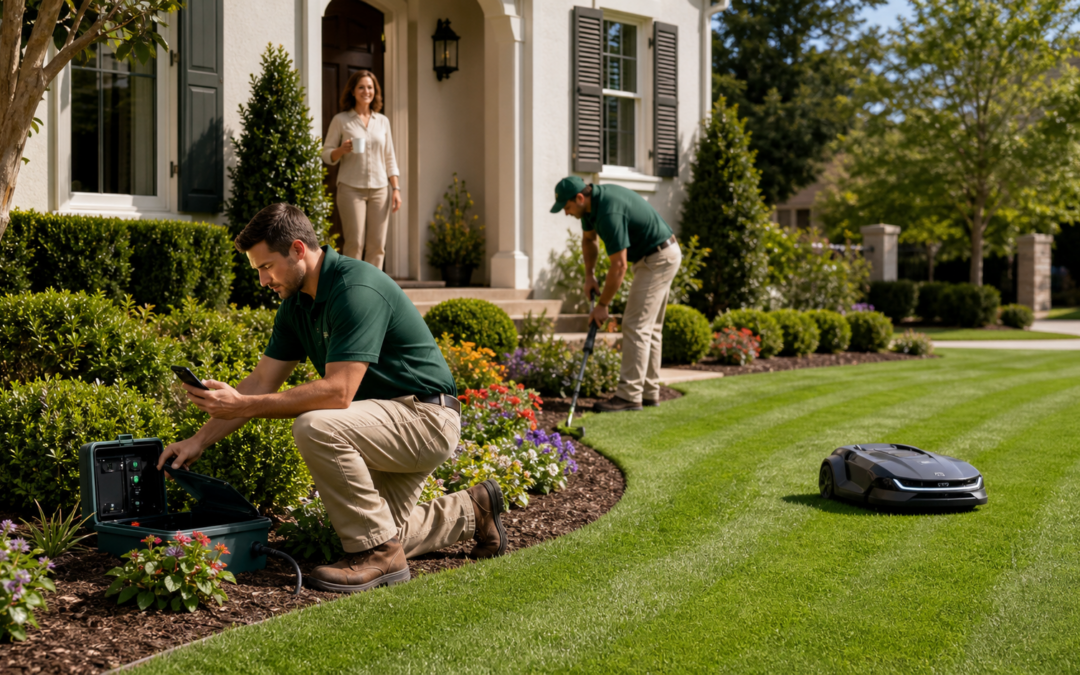
Smart Maintenance for Busy Lafayette Yards
Smart landscapes help busy Lafayette homeowners keep beautiful outdoor spaces without spending every weekend working outside. When your yard is planned, automated, and watched the right way, you can spend more time enjoying it and less time chasing problems.
In this article, we will walk through what makes a smart landscape in South Louisiana, simple seasonal checklists, quick remote monitoring habits, and how to know when it is time to bring in a local professional to back you up.
What Makes a Lafayette Landscape Truly Smart
For our climate, a smart landscape is not just about gadgets. It is about a yard that works with South Louisiana weather, soil, and architecture. The tech is there to support good design, not replace it.
A truly smart yard here usually includes:
- Climate-wise plant choices that like heat, humidity, and long growing seasons
- Automated irrigation that matches our heavy rain patterns
- Planned drainage so water has a clear place to go
- Low-maintenance layouts around pools, patios, and driveways
- Outdoor and holiday lighting on timers or smart controls
South Louisiana brings special challenges. We get:
- Humid air that can invite fungus in lawns and beds
- Soils that can stay wet, then dry out fast in full sun
- Strong storms and long stretches of rain
- Shade pockets around large homes and big trees
Smart planning starts before any controller is installed. At EdenScapes, we focus on layouts, plant groupings, and drainage first. Then we connect smart irrigation, lighting, and long-term maintenance so the whole property is easier to care for year after year.
Seasonal Automation Checklists for South Louisiana Yards
Even in a warm climate, your systems should not run the same way every month. Small changes to settings at the right time can protect plants and save you from headaches.
Late Spring to Summer (May, August)
This is prime time for outdoor living in Lafayette. As days stay long and you spend more evenings outside, it pays to tune your systems.
- Fine-tune irrigation controllers so zones in full sun get more time than shaded areas
- Add or activate rain sensors or smart controllers so the system rests after storms
- Program outdoor lighting for longer evenings so patios, pools, and driveways feel safe and inviting
- Check timers before big gatherings so paths, steps, and entries are well lit
- Set reminders for mulch top-ups in beds to help hold soil moisture and keep roots cooler
Fall (September, November)
Schedules pick up with school and football season, but plants are still growing. This is a great window to ease your systems back while keeping things tidy.
- Turn irrigation run times down as the sun angle changes, so lawns do not stay soggy
- Watch for fungus, and avoid evening watering if beds stay damp
- Reprogram lighting for earlier sunsets so guests can see walkways and outdoor cooking areas
- Set reminders for leaf pickup, bed cleanups, and selective pruning on plants that respond well in fall
- Plan updates to drainage or bed shapes while growth slows but soil is still workable
Winter to Early Spring (December, April)
Our winters are mild, and many yards stay green, but plants grow slower and natural rainfall can pick up at times. Your systems can rest a bit, too.
- Shift irrigation to minimal schedules or pause it if rain is steady and soil stays moist
- Make sure any exposed lines or backflow parts are protected from direct sun and damage
- Use smart timers for holiday and architectural lighting so displays stay on schedule while you are busy or traveling
- Take advantage of app-based lighting controls to change scenes for different gatherings
- Set early spring alerts to check irrigation filters, spray heads, and drainage grates before growth speeds up again
These seasonal habits keep the smart part of your yard actually working smart, instead of running on the same old settings all year.
Remote Monitoring Routines You Can Manage From Anywhere
Smart systems let you check on your yard from your phone, whether you are at the office, at a game, or out of town. A little attention goes a long way.
Weekly Quick-Check Routine (10, 15 Minutes)
Once a week, you can run through a simple list:
- Open your irrigation app and review recent run times and skipped days due to rain
- Clear any alerts about low pressure, leaks, or stuck valves
- Glance at your lighting schedules to be sure entries, paths, and backyard areas are covered after dark
- Check any outdoor camera views for standing water, browning patches, or plants that look wilted or burned
Monthly Deep-Dive Review
About once a month, take a slightly closer look.
- Compare irrigation water use from one month to the next and look for sudden jumps
- Walk the yard and snap photos of each bed, then note areas that lag behind the rest
- Pay attention to places where mulch washes away or soil feels soft underfoot; both can point to drainage concerns
- Confirm that controllers, Wi-Fi bridges, and transformers are connected and showing any needed updates
Travel and Second-Home Protocols
Many homeowners in and around Lafayette split time between homes or travel often. Smart systems can keep your property looking lived in and cared for.
- Create a “travel mode” for irrigation that keeps plants healthy without looking wasteful
- Set landscape and architectural lighting to turn on and off at realistic times for security and curb appeal
- Turn on alerts for spikes in water use or offline devices so you can act early
- Work with a trusted local team to pair these settings with on-site checks so someone is physically walking the property while the apps watch from a distance
When to DIY and When to Call a Lafayette Pro
Smart tools make it tempting to do everything yourself, but not every issue should be handled with an app tweak. Knowing where the line is will save you stress and protect your property.
Good Fits for DIY and App-Based Adjustments
Some tasks are simple and safe for many homeowners.
- Seasonal schedule updates on a controller when plants are already healthy
- Basic filter rinsing on irrigation screens and cleaning debris from around spray heads
- Updating lighting timers for changing daylight hours
- Visual checks after storms for obvious damage, like broken heads or knocked-over fixtures
Clear Signs You Should Call a Pro
Some problems point to deeper design or system issues. Those are best handled by a professional.
- Recurring puddles, soft spots, or muddy areas near the house, driveway, or outdoor living spaces
- Water that flows toward structures instead of away
- Lawns that stay patchy or thin even with careful watering changes
- Shrubs or trees that keep declining, showing yellow leaves or dieback in more than one season
- Repeated fungus issues in beds or turf that do not clear up with basic watering changes
- Plans to add new lighting zones, connect Wi-Fi controllers, or tie several systems into one smart plan
How Professional Maintenance Protects Your Investment
Upscale outdoor spaces around Lafayette homes are a long-term investment. Professional maintenance helps protect that investment.
A good maintenance program often includes:
- Seasonal audits of irrigation, drainage, and lighting
- Ongoing plant health checks, with pruning and adjustments at the right times
- Regular reviews of how your yard is actually used, then small changes to keep it both beautiful and practical
At EdenScapes, we combine automation with hands-on horticulture and drainage planning. Our goal is to build and maintain smart landscapes that look good, fit our South Louisiana climate, and stay low stress for busy homeowners.
Get Started With Your Project Today
If you are ready to bring technology, efficiency, and beauty together in your yard, we are here to help design and maintain your ideal outdoor space. At EdenScapes, we create and care for smart landscapes that save you time, water, and hassle season after season. Tell us about your goals and challenges so we can recommend a tailored plan for your property. Have questions or want to schedule a consultation? Simply contact us to get started.