

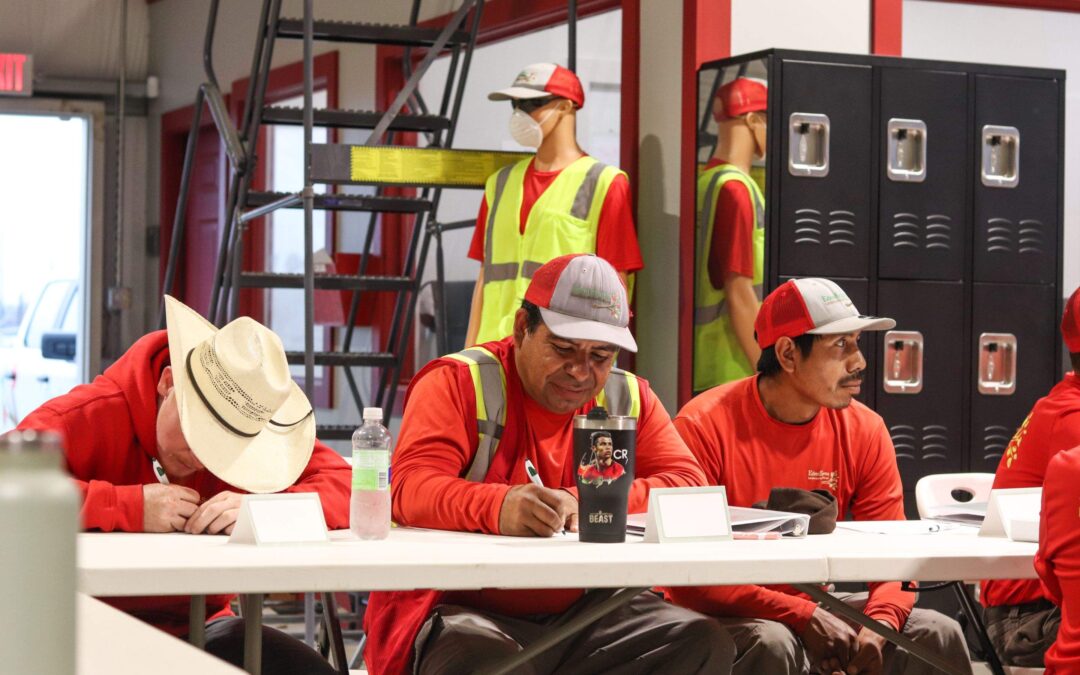
Every Wednesday morning, before a single truck rolls out to a property, our crew sits down together. Not for a safety briefing that takes five minutes and gets forgotten by lunch — for a real training session that might cover irrigation assessment one week and conflict resolution the next. We call it ROOTS, and it’s the single biggest reason our team looks different from most landscape crews in Acadiana.
Most people outside the company never see this part of what we do. This article is a look inside it.
What ROOTS Stands For
ROOTS is built around four pillars, and every week’s session falls under one of them:
- Readiness — safety training. Everything from proper lifting technique to safe driving to recognizing heat-related illness in Louisiana summers.
- Operations — trade skills. The technical craft of the work itself. For example, our team learns to identify different pruning techniques needed for different plants, diagnose insect and nutrient deficiencies, identify and report Irrigation problems, and how to dig a trench in a way that has the least amount of damage possible to a lawn.
- Opportunity — personal growth. Sessions on physical fitness, financial literacy, and personal development that have nothing to do with landscaping and everything to do with building a life.
- Team — culture. Conflict resolution, communication, and the kind of conversations that make a crew function like a team instead of a group of people who happen to work together.
A fifth category, Seasonal Events, shows up throughout the year for team gatherings that aren’t training sessions at all — just time together as a company.
What a Month of ROOTS Actually Looks Like
To make this concrete: in August, our team works through Safe Driving, an Irrigation Assessment session covering seasonal zone reprogramming, Physical Fitness, and the second half of a two-part Conflict Resolution series. That range — safety, technical skill, personal health, and interpersonal communication — isn’t unusual. It’s the pattern every month follows. Earlier in the year, our crew has sat through sessions on chemical safety, budgeting with a local financial advisor, and a session called “Be the Thermostat,” on managing your own reactions instead of letting a hard day set your mood for everyone else on the crew.
Why We Bring in Outside Voices
Some of our most valuable ROOTS sessions aren’t led by anyone at EdenScapes. We regularly bring in outside speakers — local pastors, financial advisors, and community members — to lead sessions on topics like accountability, family, and personal finance. We do this because we don’t think investing in our team should stop at the edge of what’s directly useful to the job. A crew member who’s learning to manage a budget or navigate a hard conversation at home is bringing a steadier version of himself to a client’s property.
Bilingual by Design, Not by Accommodation
Our field crew is formally trained and bilingual, and ROOTS runs that way too. This isn’t a translation added after the fact — it’s built into how we deliver training from the start, because we want every person on our team to fully engage with the material, not follow along secondhand. It reflects the same principle behind the whole program: real investment, not the minimum version of it.
Seasonal Events: The Fifth Pillar
Not every week is a formal training session. A handful of times a year, ROOTS carves out space for a Seasonal Event instead — a team gathering with no curriculum, no agenda, and no expectation beyond being together as a company outside of work. These moments matter for a simple reason: a crew that only ever sees each other on job sites, under deadline pressure, doesn’t build the same trust as one that’s also spent time together off the clock. It’s a small piece of the calendar, but it’s a deliberate one.
Why This Matters to Clients, Too
We don’t run ROOTS because it makes good marketing copy. We run it because a well-trained, well-treated crew does better work, communicates better with clients, and stays with the company longer than industry norms in this trade. That same trained crew is who shows up whether the work is landscape design and installation, ongoing estate maintenance, horticultural care, or outdoor lighting — the training doesn’t stop at one specialty. When you see the same faces on your property season after season, that continuity is a direct result of a company that invests in its people every single week, not just at hiring.
A Program Still Growing
ROOTS isn’t static. Session topics get added and adjusted year to year based on what our team actually needs — new safety concerns, new skills as our service offerings grow, new personal development topics as our crew gives feedback. If there’s one thing that’s stayed consistent since the program started, it’s the Thursday morning commitment itself: before the trucks roll out, the team comes first.