

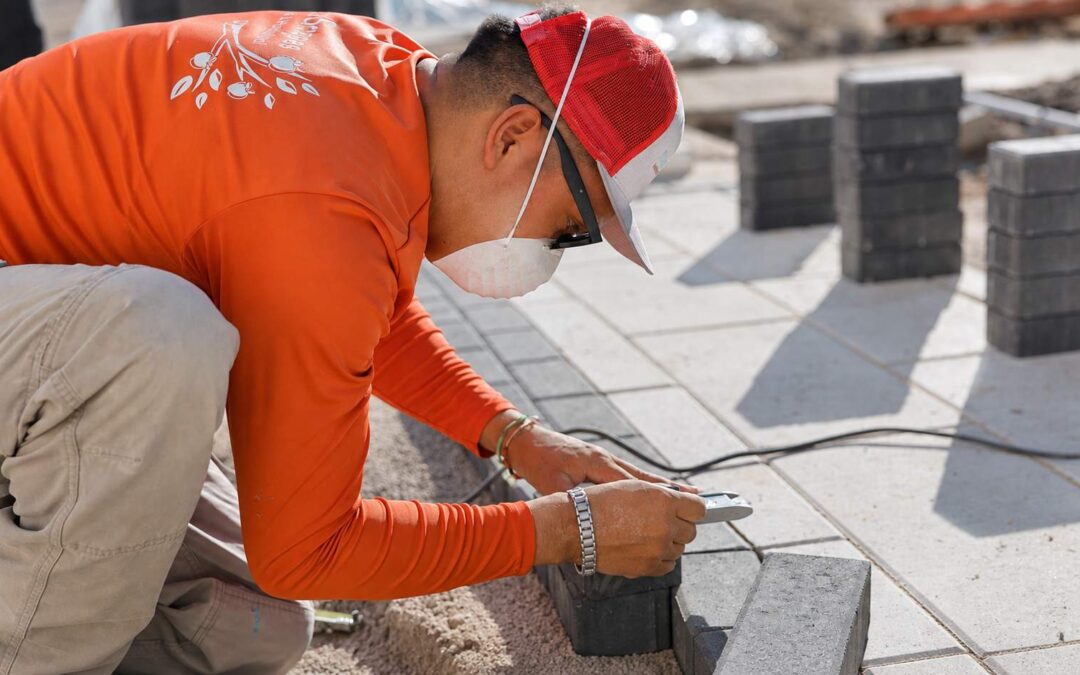
Landscaping is physical work, done outdoors, in a climate that spends a good part of the year somewhere between hot and dangerous. Safety on a crew like ours isn’t a poster in a breakroom or an annual video everyone half-watches. It’s a recurring part of our weekly ROOTS training program — Readiness is one of the four pillars we build every month around, not a once-a-year checkbox.
Heat Is the Real Risk Here
More than almost anything else, Louisiana’s climate is what shapes our safety priorities. Recognizing heat-related illness — knowing the difference between normal fatigue and something that actually needs attention — is a standing part of our Readiness training, because the risk doesn’t go away just because a crew is used to working outside. This isn’t a once-a-summer reminder. It’s built into the recurring training cycle specifically because the risk is recurring too.
Safe Driving and Proper Lifting
Our crews spend real time on the road between properties, and safe driving is a regular ROOTS training topic for exactly that reason — it’s one of the more overlooked risks in this trade, precisely because it doesn’t happen on a job site. Proper lifting technique gets the same recurring attention, since repetitive physical strain is one of the more common ways landscaping work leads to injury over time, not from a single accident but from cumulative wear that better technique actually prevents.
Chemical Safety
Any work involving fertilizers, herbicides, or other treatment products comes with real safety requirements, and chemical safety is one of the sessions our team works through as part of ROOTS. Training here isn’t a one-time certification that gets filed away — it’s revisited as part of the same recurring cycle everything else in ROOTS follows.
Site-Specific Hazards Change by the Job
Every property presents its own risks beyond the general ones — uneven ground, underground utilities that weren’t marked clearly, work happening near a pool or water feature, or a commercial site with vehicle traffic moving through an active parking lot. A crew that’s only trained on general safety principles once a year doesn’t necessarily carry that training into the specific hazards of the property they’re standing on that day. Recurring training gives us more opportunities to reinforce that a safety mindset has to adapt to the site, not just follow a generic checklist.
Why Weekly Training Beats an Annual Checklist
A lot of companies in this trade treat safety training as a compliance requirement — something to complete once a year and move past. We treat it as a recurring discipline for the same reason we treat trade skills and personal development that way: a single training session doesn’t change behavior on its own, but a program that keeps coming back to the same priorities, week after week, actually does. Readiness isn’t separate from the rest of what ROOTS does — it’s built into the same weekly rhythm as everything else we invest in as a company.
Why This Matters to Clients
A crew that’s trained to recognize heat stress in themselves and each other, that handles equipment correctly, and that takes chemical safety seriously isn’t just safer for the people doing the work — it’s more consistent for the properties they’re working on. Safety training that actually sticks is part of the same investment that keeps the same faces showing up on your property season after season, rather than a crew that turns over because the work wasn’t sustainable.
If you want a closer look at how our full ROOTS program works, we’ve written about it in more detail in “Inside EdenScapes: How We Celebrate Our Team.”