

Stop Fighting Standing Water and Get Your Yard Back
Standing water after every rain can make your yard feel off-limits. Muddy pets, slippery walkways, soggy spots around your patio, and grass that never really dries out can turn a beautiful property into a headache.
In Lafayette and across Acadiana, this is very common. We see it in older neighborhoods and in brand-new subdivisions. Clay-heavy soil, flat lots, and fast, heavy rain all work against you. When water has nowhere to go, it sits, and your yard pays the price.
We are going to walk through three common drainage tools that people hear about all the time: a traditional drainage system, French drains, and swales with grading. You will learn how each one works, where each makes sense in our local conditions, and some real pros and cons so you can start to see what might fit your property. We will also explain why the best results usually come from a full drainage plan, not a one-piece fix.
Why Lafayette Lawns Stay Waterlogged After Every Storm
Lafayette gets hard, fast rain, especially in spring and early summer. When that water hits packed clay soil, it does not soak in quickly. Instead, it spreads out, fills low spots, and stays there.
A few common troublemakers in our area are:
- Clay-heavy or compacted soil that drains slowly
- Flat or low-lying yards where water cannot find a downhill path
- New construction that changes how water flows between homes
- Big hard surfaces like roofs, driveways, and pool decks
All that roof runoff has to land somewhere. If you only have a couple of basic downspouts, those splash zones can turn into swamps. Water can start to:
- Pool for more than a day after a storm
- Make the turf feel spongy and uneven
- Expose roots and wash away mulch
- Leave a mildew or sour smell
- Creep toward slabs, piers, or crawl spaces
When you see these signs over and over, it means you have more than just a “wet week.” That is when a professional assessment really matters. Picking a traditional drainage system, French drain, or swale without a plan can just move the problem from one corner of the yard to another. The right design should guide water safely all the way to a smart discharge point.
Drain Irrigation Systems for Smart, Hidden Water Control
A traditional drainage system is like a hidden highway under your lawn. It uses buried pipes, catch basins, and small emitters to pull water out of problem areas and send it to a safe place.
This type of system is a strong fit for Lafayette properties that need both function and clean design, such as:
- Upscale yards with detailed planting beds and outdoor living areas
- Tight lot lines where there is no space for visible swales
- Neighborhoods with HOA limits on big grading changes
- Yards where you want to move water away from foundations and also spread it gently in another part of the yard
Some key pros of a traditional drainage system are:
- It is discreet and lawn-mower friendly once installed
- It can be tailored to very specific problem spots
- It helps protect patios, walkways, driveways, and structures
The final investment depends on details like soil type, pipe depth, how far the water must travel, and how complex your existing yard layout is. Long runs across heavy clay, tight spaces, or intricate plantings all shape the overall scope.
French Drains for Targeted Subsurface Drainage Fixes
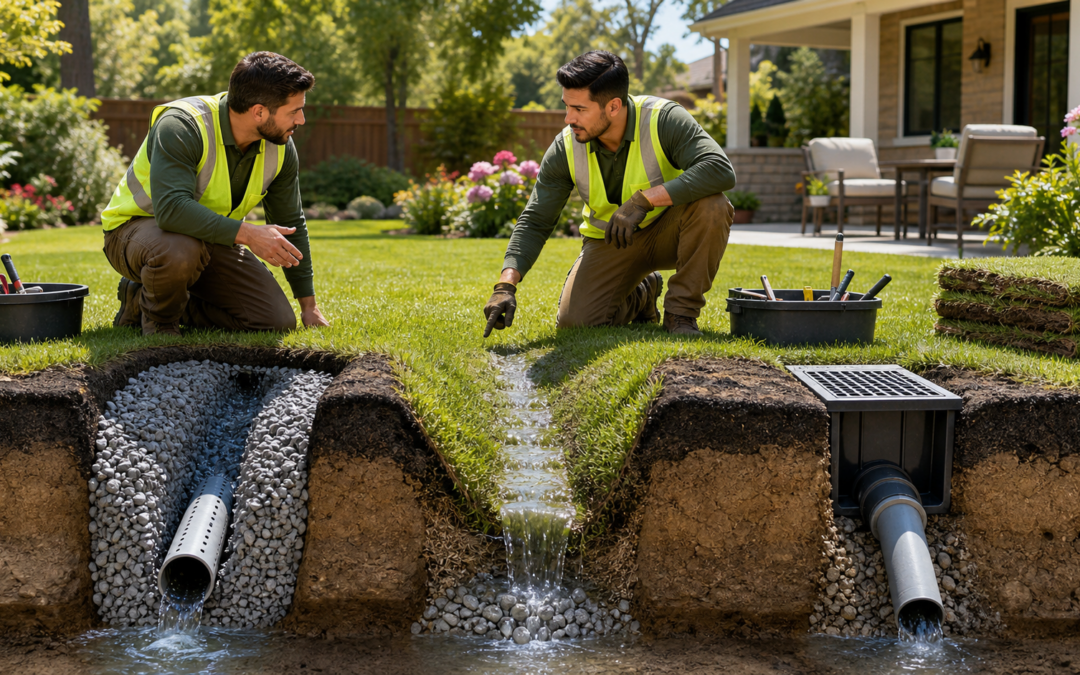
A French drain is a focused tool. It is usually a perforated pipe laid in a gravel trench, wrapped in fabric to help keep soil out. Instead of just catching water on the surface, it collects subsurface moisture and moves it away.
French drains are very helpful around Lafayette when you have:
- Chronic wet strips along fences or between houses
- Soggy side yards where water hangs around the foundation
- Soft spots along driveways or walkways
- Older yards where compacted clay holds water under the top layer of soil
Pros of French drains include:
- Great for treating specific low areas along structures
- Mostly invisible after the lawn grows back over the trench
- Able to tie into catch basins, gutter outlets, or other drainage pieces
There are some limits you should know:
- They can clog because of the dense clay soils in Acadiana
- They are not the best choice for huge amounts of surface water from big roofs or wide patios
Details like trench depth, pipe material, gravel quality, and run length all play a big role in long-term performance. Cutting corners on any of those often means the drain stops working early, especially in clay soil that already fights drainage.
Swales and Grading for Natural, Low-Tech Water Solutions
A swale is a shallow, gently sloped channel that guides water from where you do not want it to where it is safe. Many times, it is paired with regrading the yard so the whole surface encourages water to flow the right direction. Swales can be lined with grass, river rock, or even planted as a dry creek bed-style feature.
Swales shine in Lafayette when you have:
- Larger yards with room to move soil around
- New builds where original grading is not working
- Wide, flat areas that flood during storms
- Homeowners who like a more natural, visible solution that blends into the yard
Some pros of swales and grading:
- Often one of the most cost-effective long-term fixes
- No mechanical parts, so there is less to break
- Can look like a design feature with stone, native plants, or ornamental grasses
- Helps improve overall soil structure and yard health over time
Cons to keep in mind:
- They need enough space and the right elevation changes to work well
- They are harder to use on small urban lots with tight setbacks
- The change in yard shape is visible, which not everyone prefers
- Performance can drop if the swale fills with debris or if nearby properties change their grading
The investment in swales and grading is driven by how much soil has to move, what kind of equipment is needed, and whether you want a simple grassed channel or a more decorative look with rock and planting.
How to Choose the Right Fix for Your Lafayette Property
So how do you decide which option makes sense for your yard? It helps to think about the type of problem, how your property is set up, and how much disruption you can live with.
A simple way to think about it:
- Traditional Drainage system: best for complex, high-end yards, tight spaces, existing low spots, when you need hidden but powerful control
- French drain: best for large flat areas and when water holds along structures or slabs
- Swale plus grading: best for wide surface water issues where you have space to reshape the yard
The best answer is usually a mix of tools. For example:
- A swale that gently leads water toward a catch basin
- A French drain tied into that basin to handle subsurface water
- A traditional Drainage system that carries and spreads that water safely away from your home
Each option also feels different during installation. Swales and grading usually need bigger equipment and more yard disruption. French drains and Traditional Drainage systems can sometimes be more “surgical,” but still involve trenching and careful work around existing plants and hardscapes. Phasing a plan is one way to get relief before the heaviest summer storms while spreading the work out.
As days get longer and we move deeper into the rainy season, it is a good time for Lafayette homeowners to start thinking about drainage. A well-planned mix of grading, French drains, and Traditional Drainage can turn a soggy lawn into a yard you actually enjoy again.
Get Started With Your Project Today
If drainage issues are threatening your landscape, our team at EdenScapes can design and install a customized drain irrigation system that protects your property and keeps it looking its best. We take the time to understand your yard’s unique grading, soil, and water flow so your solution works in every season. Ready to talk through ideas or schedule a visit? Simply contact us and we will walk you through the next steps.