

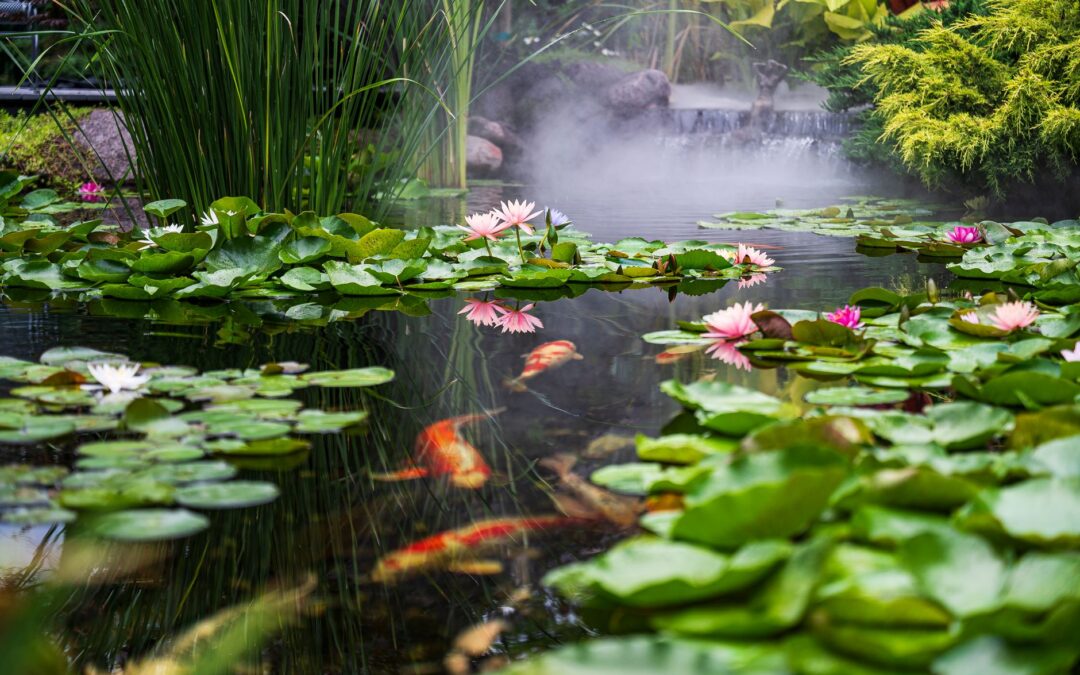
When you search koi pond repair near me in Lafayette, most repairs land between $250 and $2,500 depending on the problem: a failed pump runs $250–$800, a punctured liner patch $300–$1,200, and a full liner replacement $1,500–$4,000. Minor algae or filter issues are often fixable in a single visit under $400. Below is a complete, honest guide to diagnosing your pond, understanding fair pricing, and choosing the right Acadiana professional — before you pay for work you may not need.
What does koi pond repair near me typically cost?
Koi pond repair near me costs vary widely because ponds fail in very different ways. Here is a realistic breakdown for the Lafayette and Acadiana area:
Common repair costs
- Pump replacement: $250–$800, depending on flow rate (koi ponds need a full water turnover every 1–2 hours).
- Filter or UV clarifier repair: $150–$600.
- Liner patch (small puncture): $300–$1,200.
- Full EPDM liner replacement: $1,500–$4,000 for typical residential ponds.
- Leak detection and dye testing: $150–$450.
- Plumbing or bulkhead reseal: $200–$900.
Labor in South Louisiana runs roughly $65–$120 per hour. Materials like 45-mil EPDM liner cost about $0.70–$1.10 per square foot. Always ask whether a quote is flat-rate or time-and-materials. According to the Aquascape maintenance guide, most healthy ponds only need seasonal cleanouts rather than structural repair, so an honest contractor may tell you the fix is simpler than you feared.
Why is my koi pond losing water?
Most koi ponds lose water for one of three reasons: evaporation, splash loss, or an actual leak. Before assuming the worst, rule out the easy culprits.
How to isolate the problem
1. Top the pond off and mark the level. Turn off the pump and wait 24 hours. If the level holds, the leak is in the plumbing or waterfall, not the basin.
2. Run the pump and re-check. If it drops only when running, suspect the stream, spillway, or a hairline in the return plumbing.
3. Check for splash and wicking. Rocks or plant roots crossing the liner edge can wick water out surprisingly fast.
In our humid climate, summer evaporation of 1–1.5 inches per week is normal, so a slow drop isn’t automatically a defect. A dye test pinpoints true leaks. The EPA WaterSense program notes that outdoor water features are a common source of hidden loss homeowners overlook.
How do I choose a koi pond repair company near me?
Choose a koi pond repair company near me based on live-fish experience, not just landscaping credentials — a koi pond is a living ecosystem, not a fountain.
Questions to ask before hiring
- Have you repaired ponds with living koi still in them?
- What is your plan to hold and protect fish during a liner job?
- Do you test water chemistry (ammonia, nitrite, pH, KH) as part of the visit?
- Is the quote flat-rate, and what does it exclude?
- Do you offer a workmanship warranty?
A contractor who talks only about pumps and liners, and never about biological filtration or beneficial bacteria, may not understand koi health. Ask for photos of past pond work in Acadiana. The Louisiana State University AgCenter publishes regional guidance on pond and water-garden management that a knowledgeable local pro should be familiar with.
Why do competitors rank for pond repair — and what should you actually expect?
Many Lafayette landscapers rank for pond and water-feature searches because they list “water features” as one line among dozens of services. That surface-level coverage often hides a gap: general lawn crews may build a pond, but far fewer are equipped to repair one with koi living in it.
What sets true pond repair apart
- Ecosystem knowledge: protecting fish, beneficial bacteria, and water chemistry during repair.
- Integrated design-build-maintain: a firm that designed the pond understands its plumbing and can maintain it afterward, avoiding guesswork.
- Structural craftsmanship: proper liner seaming, rockwork, and drainage that survives South Louisiana’s heavy rain and clay soil.
When you compare providers, look past the keyword-stuffed service list. The right company can explain why your pond failed and how to prevent it next time — not just swap parts. A firm that handles hardscaping, drainage, and irrigation in-house can address the root cause when a pond failure is actually a grading or runoff problem.
Can a koi pond be repaired, or does it need full replacement?
Most koi ponds can be repaired rather than replaced. Full rebuilds are only necessary when the liner is failing in multiple places, the structure has shifted, or the original design was undersized for the fish load.
Repair usually wins when:
- The leak is isolated to one patchable area.
- Pumps and plumbing are accessible and standard.
- The basin shape and depth (koi need at least 3 feet) are still adequate.
Replacement makes sense when:
- The liner is brittle, sun-degraded, or cracked in several spots.
- The pond is too shallow to overwinter koi safely.
- You want to expand or add a bog filter for better water quality.
A good rule: if repair costs exceed 50% of a rebuild, weigh the upgrade. But many homeowners are quoted a rebuild when a $400 patch would do — always get a second opinion before committing to a five-figure project.
How long does koi pond repair take?
Most koi pond repairs take one to three days. Simple pump or filter swaps are same-day. Leak detection plus a liner patch is typically one full day. A complete liner replacement — which requires draining, safely relocating the koi to a holding tank, cleaning, re-lining, and re-establishing water chemistry — usually spans two to three days.
The timeline breakdown
1. Day 1: Diagnosis, fish relocation to aerated holding, drain and clean.
2. Day 2: Liner or structural repair, plumbing reset, refill.
3. Day 3: Water conditioning, bacteria re-seeding, fish reintroduction.
Rushing fish back into fresh, unconditioned water is the most common cause of post-repair fish loss. Chlorine must be neutralized and temperature matched. A patient professional will acclimate koi slowly over hours, not minutes.
What maintenance prevents future koi pond repairs?
Routine maintenance prevents the majority of costly koi pond repairs. Ponds fail mostly from neglect — clogged filters, overloaded fish counts, and debris buildup that strains pumps.
A simple prevention checklist
- Weekly: skim leaves and debris, check pump flow, top off with dechlorinated water.
- Monthly: rinse filter media in pond water (never tap water — it kills bacteria), test ammonia and nitrite.
- Seasonally: clean the basin bottom, inspect liner edges, service the UV clarifier bulb annually.
- Before winter: reduce feeding as temps drop below 55°F; koi stop digesting in cold water.
An integrated maintenance plan catches small issues — a fraying seam, a straining pump — before they become emergencies. You can learn more about ongoing outdoor care through EdenScapes, a Lafayette design-build-maintain firm that services ponds and water features across Acadiana.
Is DIY koi pond repair a good idea?
DIY works for small, non-structural fixes but rarely for liner and plumbing repairs involving live fish. Swapping a pump, cleaning a filter, or applying a small patch above the waterline are reasonable weekend tasks for a confident homeowner.
DIY-friendly vs. call-a-pro
Reasonable DIY:
- Pump and UV bulb replacement.
- Filter media cleaning.
- Minor above-water rock adjustments.
Call a professional:
- Underwater or seam leaks.
- Any repair requiring you to drain the pond with koi present.
- Suspected structural or drainage failure.
The hidden risk in DIY is the fish. Draining a pond, exposing koi to temperature swings, or reintroducing them to unbalanced water can wipe out a collection worth hundreds or thousands of dollars. When live koi are involved and the repair is below the waterline, professional help usually protects both your fish and your wallet.