

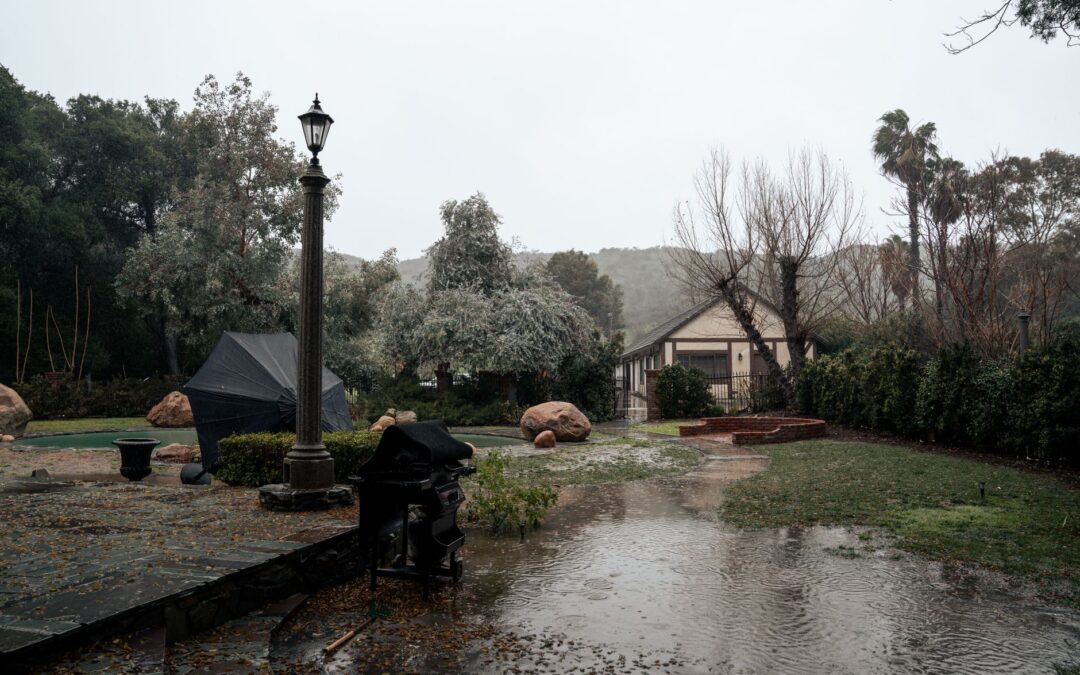
The best drainage solutions for Louisiana yards combine surface grading, French drains, and catch basins engineered for our heavy clay soil and 55+ inches of annual rainfall. Because Acadiana sits low, flat, and on poorly-draining clay, no single fix works everywhere — most effective systems layer two or three methods. Expect to invest $1,500–$8,000 for a professionally designed residential drainage system, depending on lot size and severity.
Standing water, soggy lawns, foundation seepage, and dying plants are all symptoms of the same problem: water with nowhere to go. This guide walks through every proven drainage solution used on Louisiana yards, what each costs, and how to decide which combination your property needs.
Why do Louisiana yards flood so badly?
Louisiana yards flood because of a specific combination of factors that most drainage guides ignore. First, South Louisiana receives roughly 55–65 inches of rain per year — nearly double the U.S. average — often in short, intense bursts that overwhelm slow-draining soil. Second, our soil is dominated by dense clay that the USDA classifies as having very low infiltration rates; water pools on top instead of soaking in.
Third, Acadiana is flat. With minimal natural slope, water has no gravity assist to move away from structures. Add high water tables that sit just a few feet below the surface, and the ground is often already saturated before a storm even begins.
The LSU AgCenter notes that improper grading around foundations is one of the most common causes of residential water damage in the state. Understanding these four drivers — rainfall volume, clay soil, flat terrain, and shallow water table — is the foundation of choosing effective drainage solutions for Louisiana yards.
What are the best drainage solutions for Louisiana yards?
The best drainage solutions for Louisiana yards fall into surface and subsurface categories, and effective designs almost always combine both. Here are the seven methods professionals rely on in Acadiana.
Surface drainage
- Regrading and sloping — Reshaping the yard to create a minimum 2% slope (about 2 inches per 10 feet) directing water away from structures.
- Swales — Shallow, gently vegetated channels that guide runoff toward a discharge point.
- Dry creek beds — Rock-lined channels that move surface water while looking intentional and attractive.
Subsurface drainage
- French drains — Perforated pipe in a gravel trench that collects and redirects groundwater underground.
- Catch basins — Grated boxes at low points that capture pooling water and feed it into pipe.
- Channel drains — Linear grates set into driveways and patios to intercept sheet flow.
- Sump systems — Pumps that lift water out of chronically wet low spots where gravity discharge isn’t possible.
Most Louisiana properties need a hybrid: grading to move surface water, plus French drains and catch basins to handle what saturates the soil.
How much do drainage solutions cost in Louisiana?
Drainage solutions for Louisiana yards typically cost between $1,500 and $8,000 for a residential system, though complex lots can exceed that. Pricing depends on linear footage, soil conditions, and how far water must travel to a legal discharge point.
Typical price ranges
- French drain: $25–$60 per linear foot installed
- Catch basin: $200–$450 each, plus connecting pipe
- Dry creek bed: $15–$40 per linear foot depending on stone
- Yard regrading: $1,000–$5,000 depending on volume of earth moved
- Sump pump system: $1,200–$3,000 including basin and discharge line
Factors that raise cost include mature tree roots, existing hardscape that must be cut and restored, long runs to reach a street or ditch, and the need for permits when tying into municipal storm drains. A professional site assessment is the only way to get an accurate figure, because two neighboring lots can require very different systems based on how water actually moves across them.
Do French drains work in clay soil?
Yes, French drains work in clay soil, but only when installed correctly for Louisiana’s conditions. Because clay barely absorbs water, the trench itself becomes the drainage path — so the design must prioritize capturing and channeling water rather than relying on it soaking in.
For clay soil, effective French drains need a wider gravel envelope, proper filter fabric to keep fine clay particles from clogging the pipe, and a consistent slope of at least 1% toward the outlet. Skimping on gravel or omitting fabric is the number-one reason French drains fail here within a few years.
Depth matters too. In heavy clay with a high water table, drains placed too deep sit in saturated ground and lose effectiveness. An experienced installer reads the soil profile and sets depth to intercept the water layer that’s actually causing problems. Done right, a French drain can keep a chronically soggy yard usable through even the wettest Acadiana spring. Done wrong, it becomes an expensive buried gutter full of mud — which is why installation expertise matters more than the materials themselves.
Why do competitors rank for drainage, and what should you look for instead?
Search results for drainage in Louisiana are dominated by general university guides and landscapers who list drainage as one line item among many. That surface-level coverage explains what a French drain is but rarely addresses the engineering our clay and rainfall actually demand — or how drainage integrates with the rest of your landscape.
Here’s what genuinely separates a lasting drainage system from a repeat problem:
What to look for in a drainage contractor
- Site-specific water study — They observe how water moves during or after rain, not just a dry-day walkthrough.
- Integrated design — Drainage that coordinates with grading, hardscape, and planting so fixes don’t undo each other.
- Legal, permitted discharge — Water routed to an approved outlet, not dumped onto a neighbor’s lot.
- Restoration included — Sod, plants, and hardscape returned to finished condition, not left as a scar.
A design-build-maintain firm has a structural advantage here: because the same team plans the drainage, builds it, and maintains the landscape long-term, the system is engineered to work with everything else on the property rather than against it.
How do I know which drainage solution my yard needs?
You determine the right drainage solution by diagnosing exactly where water collects, how long it lingers, and where it can safely go. Match the symptom to the fix:
Match the problem to the solution
- Water pooling in the lawn’s low spots → catch basins plus regrading
- Water against the foundation → regrading first, then a foundation-perimeter French drain
- Soggy ground that never dries → subsurface French drain to lower the water table locally
- Runoff crossing a driveway or patio → channel drain
- A wet area with no downhill outlet → sump pump system
- Sheet flow from an uphill neighbor → interceptor swale or dry creek bed
Many Louisiana yards show two or three of these at once, which is why a professional assessment beats guessing. Track where water sits after the next hard rain and photograph it — that real-world evidence is worth more than any dry-day inspection. If you’re weighing options for your property, the team at EdenScapes provides drainage and irrigation design as part of its landscape services in Lafayette and the Acadiana region.
Can drainage improvements be combined with landscaping?
Yes, and in Louisiana they should be. The most durable drainage solutions are the ones designed alongside the landscape rather than retrofitted after the fact. Dry creek beds double as garden features. French drain trenches can run beneath planting beds. Regrading creates the exact slopes that make patios and walkways function correctly.
When drainage and landscaping are planned together, you avoid the common trap of installing an irrigation system, hardscape, or new sod only to tear it up later to fix water problems. It also protects your investment: standing water rots plant roots, undermines retaining walls, and erodes mulch and topsoil.
The EPA’s guidance on stormwater management encourages capturing and slowing runoff on-site — techniques like rain gardens and vegetated swales that both drain a yard and reduce strain on public systems. For Acadiana homeowners, that integrated approach turns a purely defensive expense into a feature that improves how the whole property looks and functions.
When should you call a professional for drainage?
Call a professional when water reaches your foundation, when pooling persists more than 24 hours after rain, or when a previous DIY fix hasn’t held. These signals mean the problem involves soil, slope, and water-table interactions that require design, not just digging.
Warning signs you shouldn’t ignore
- Water seeping into a crawlspace, garage, or against slab foundations
- Cracks appearing in walls or driveways (a sign of shifting saturated soil)
- Mosquito breeding from standing water that never clears
- Lawn or plants dying in the same wet spots year after year
- Erosion channels forming across the yard
Minor puddling in an open corner of the yard may not need intervention at all — sometimes the honest answer is that a low spot is harmless. But once water threatens structures or a system has to route around trees, hardscape, and property lines to a legal outlet, professional design pays for itself. In Acadiana’s clay-heavy, flat, rain-soaked conditions, a properly engineered drainage system is one of the highest-return improvements a Louisiana homeowner can make.