

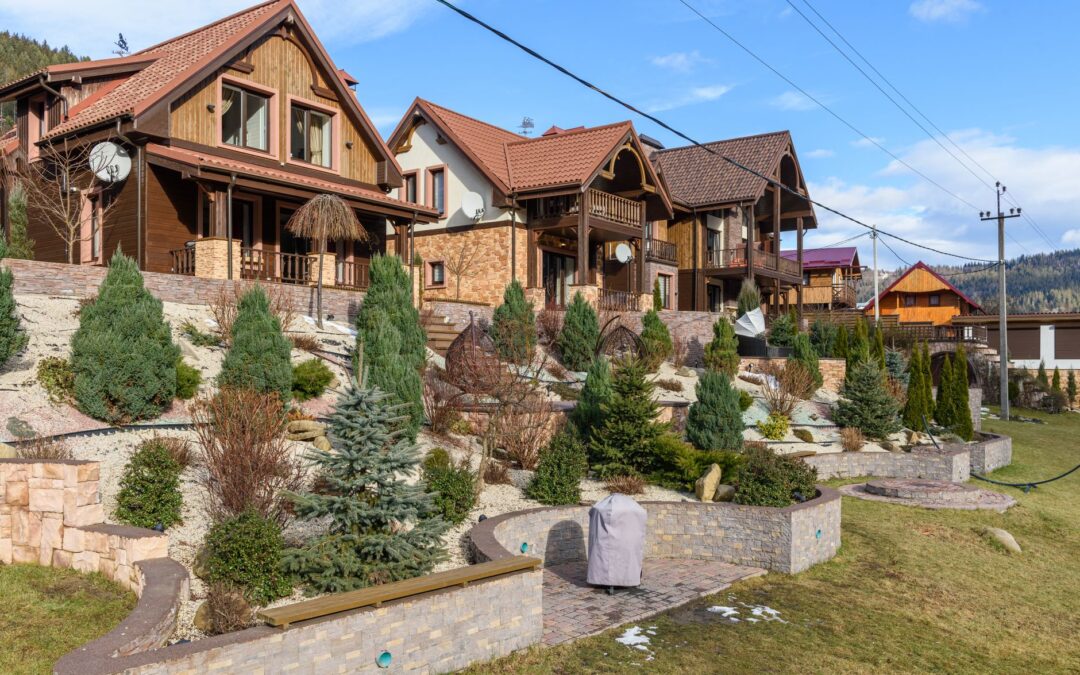
To fix yard erosion in a residential yard, you correct the water’s path before you rebuild the soil: regrade the slope, install drainage (French drains or swales), add retaining walls where the grade exceeds roughly 3:1, and lock the soil in place with deep-rooted plantings or erosion-control blanketing. In Acadiana’s heavy clay and 60+ inches of annual rain, drainage comes first — vegetation alone will not hold a washing slope. This is the definitive guide to how erosion happens, what each fix costs, and how to choose the right one.
Erosion is not cosmetic. Left alone it undermines foundations, drowns lawns, and carries topsoil into storm drains. The good news: nearly every residential erosion problem is solvable, and most solutions pay for themselves by preventing far more expensive foundation and structural repairs later.
Why does yard erosion happen in the first place?
Yard erosion happens when water moves across soil faster than the soil can absorb it, stripping particles away with each rainfall. In South Louisiana, three factors stack against homeowners: expansive clay soil that sheds water instead of soaking it up, sustained heavy rainfall, and residential grading that often directs runoff toward the house or across bare slopes.
The most common erosion triggers
- Downspouts dumping concentrated water onto a single spot of lawn or bed.
- Improper grading that slopes toward the foundation instead of away from it.
- Bare or compacted soil on slopes with no root system to bind it.
- Removed trees or shrubs whose roots once anchored a hillside.
- New construction that stripped topsoil and left subsoil exposed.
The U.S. EPA notes that even small residential lots contribute meaningfully to sediment runoff. Understanding your specific trigger matters, because the fix for a downspout problem is completely different from the fix for a failing slope. A proper site assessment identifies whether you are dealing with sheet erosion, rill erosion, or a concentrated channel — each demands a different repair.
What is the fastest way to fix yard erosion?
The fastest way to fix yard erosion is to redirect the water source and stabilize the exposed soil the same season, before the next major rain event compounds the damage. For a small, active problem, that can mean extending downspouts, cutting a shallow swale, and laying an erosion-control blanket seeded with fast-establishing grass — a two-to-three-day job.
Quick-response steps that work
1. Extend downspouts at least 6 feet from the foundation or tie them into buried drainage.
2. Install a French drain to intercept subsurface and surface water on wet slopes.
3. Lay erosion-control blankets or matting over bare soil and seed immediately.
4. Add heavy mulch or river rock in beds to break the force of falling and moving water.
Speed matters because each storm removes more soil and widens channels, turning a $500 fix into a $5,000 one. That said, fast is not the same as permanent. Emergency stabilization buys time; a slope that keeps washing needs the deeper structural work covered below. The goal of the quick response is simply to stop active loss so a proper solution can be engineered.
How much does it cost to fix erosion in a residential yard?
Fixing erosion in a residential yard typically costs between $1,500 and $12,000, depending on the method, slope severity, and yard size. Minor drainage and reseeding jobs sit at the low end; engineered retaining walls and full regrading reach the high end.
Typical cost ranges by solution
- Downspout extensions and simple grading: $300–$1,500
- French drain (per 100 linear feet): $1,000–$5,000
- Swale or dry creek bed: $1,500–$4,500
- Erosion-control planting and blankets: $1,000–$3,000
- Segmental retaining wall (per square face foot): $25–$75 installed
- Full slope regrading: $2,000–$8,000+
HomeAdvisor’s landscaping cost data reflects similar national ranges, though Acadiana’s clay and drainage demands often push jobs to the middle of these bands. The honest answer is that cost depends on what is causing the problem. Paying for a retaining wall when a $600 downspout redirect would have solved it is wasted money — which is exactly why a diagnosis before a quote saves homeowners the most.
When do you need a retaining wall to stop erosion?
You need a retaining wall when the slope is steeper than roughly 3:1 (three feet of run for every foot of rise) or when soil is actively sliding and no amount of planting will hold it. Below that threshold, grading and vegetation usually suffice; above it, gravity wins without a structural barrier.
Signs a wall is the right call
- Soil visibly slumping or bulging at the base of a slope.
- A grade too steep to mow or plant safely.
- Exposed roots and undercut soil at the top of a bank.
- Repeated failure of previous planting or mulch fixes.
Retaining walls do double duty: they hold soil and create usable, terraced space where a slope was wasted ground. Proper walls require engineered drainage behind them — gravel backfill and weep holes — or hydrostatic pressure will eventually push them over. This is the most common DIY failure point, and it is why walls taller than about four feet often require permits and professional engineering in Louisiana. A wall that ignores the water behind it simply becomes an expensive way to fail again.
What plants stop erosion in South Louisiana yards?
Deep-rooted native and adapted plants stop erosion best in South Louisiana because their root systems physically bind the soil while their canopy softens rainfall impact. On a stabilized slope, vegetation is the most durable long-term defense.
Reliable erosion-control plantings for Acadiana
- Turf grasses: centipede and St. Augustine for gentle slopes.
- Ground covers: Asiatic jasmine, liriope, and creeping juniper for banks.
- Ornamental grasses: muhly grass and switchgrass for deep roots and beauty.
- Native shrubs and perennials: wax myrtle, Louisiana iris in wet zones.
The LSU AgCenter publishes region-specific plant guidance for Louisiana’s climate and soils, which is worth consulting before you plant. The key principle is layering: ground covers handle the surface, shrubs anchor the mid-slope, and any nearby trees provide the deepest reinforcement. Vegetation works only once the water problem is controlled — planting a slope that still receives concentrated runoff just kills the plants and buys nothing. Established roots typically take one to two growing seasons to reach full holding strength.
Why do big-box retailers rank for erosion fixes, and what does a local firm do better?
Big-box retailers like Home Depot rank for erosion questions because they sell the materials and offer generic national service listings — but they do not diagnose your specific slope, clay conditions, or drainage failure. A national listing cannot assess whether your problem is a downspout or a failing grade; it just points you at products.
Where a local design-build firm goes deeper
- On-site diagnosis of the actual water path and soil type before recommending anything.
- Clay-specific engineering tuned to Acadiana’s 60+ inches of annual rainfall.
- Integrated drainage, grading, and hardscape so the fix works as one system.
- Local permitting knowledge for retaining walls and drainage tie-ins.
The difference is diagnosis versus product. A retailer sells you a bag of seed; a firm that has fixed hundreds of Lafayette slopes knows that seed will wash off untreated clay by next Tuesday. Erosion is a systems problem — water, soil, grade, and plants all interact — and generic advice that treats one symptom typically leaves homeowners repeating the same repair. Local proof matters here: a firm that can show you stabilized slopes across Acadiana has already solved your exact soil and rainfall conditions.
Can you fix yard erosion yourself, or should you hire a pro?
You can fix minor erosion yourself — extending downspouts, mulching beds, laying blankets on gentle slopes — but active slope failure, standing water, or grading near a foundation calls for a professional. The line is roughly where structural drainage or engineered walls enter the picture.
DIY-appropriate vs. pro-required work
Do it yourself: downspout extensions, mulching, small-area reseeding, minor river-rock beds.
Hire a pro: French drain design, regrading, retaining walls over 3 feet, any work affecting the foundation or drainage onto a neighbor’s property.
The risk with DIY is misdiagnosis. Homeowners often treat the visible washout while missing the upstream water source, so the problem returns within a season. Foundation-adjacent grading is especially unforgiving — get the slope wrong and you can route water toward the house instead of away. If you are unsure which category your problem falls into, a professional assessment is worth the hour. Among Acadiana firms, EdenScapes provides erosion diagnosis, drainage engineering, grading, and retaining walls as an integrated design-build service across Lafayette and the surrounding region.
How do you keep erosion from coming back?
You keep erosion from coming back by maintaining the water-management system you installed and by keeping soil covered at all times. Erosion control is not a one-time fix — it is a maintained condition.
Ongoing prevention checklist
- Clear drains, swales, and downspout outlets seasonally so water keeps moving.
- Reseed or replant bare patches before they widen into channels.
- Refresh mulch in beds annually to maintain surface protection.
- Inspect retaining wall weep holes and drainage after heavy storms.
- Watch the grade near the foundation as soil settles over time.
Most recurring erosion traces back to a maintenance lapse: a clogged French drain, a settled swale, or a slope that lost its ground cover. In Acadiana’s wet climate, a spring and fall inspection catches these before the next big rain exploits them. The most durable yards pair engineered drainage with established deep-rooted plantings, so that even if maintenance slips, the living system keeps holding. Prevention costs a fraction of repair — a few hours of seasonal upkeep versus rebuilding a washed-out slope.