

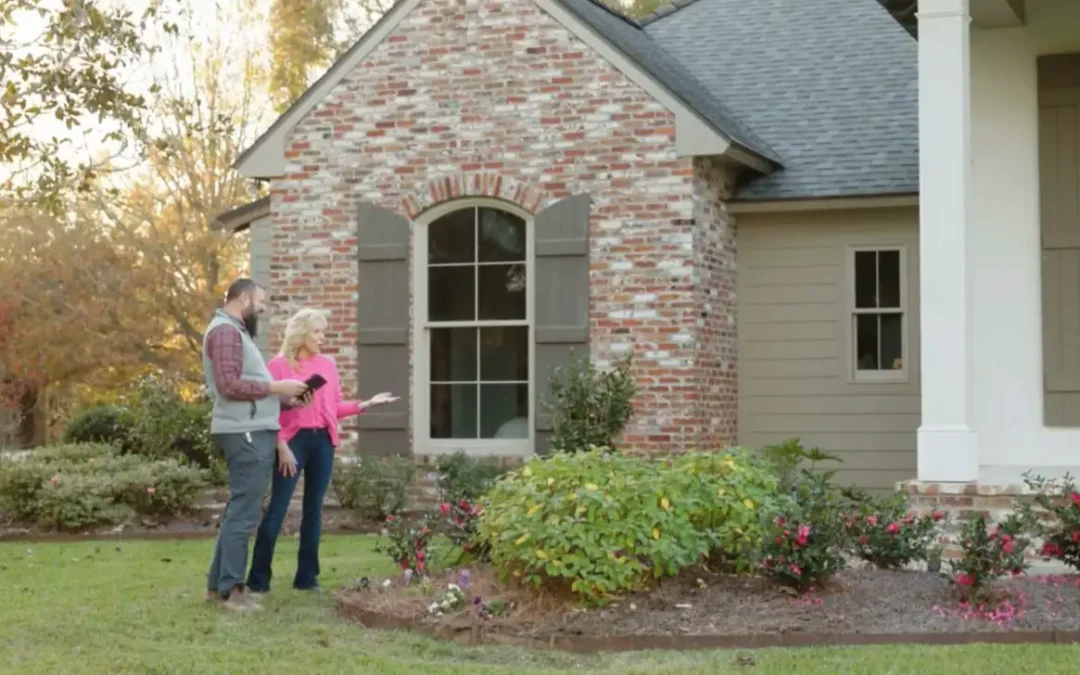
We hear a version of this question often enough that it deserves a real answer: a homeowner gets three quotes for what looks like the same project, and the numbers aren’t close. Not fifteen percent apart — sometimes double. It’s a fair thing to be confused by, and the honest answer is that those quotes usually aren’t pricing the same project at all, even when the wish list on paper looks identical.
Here’s what’s actually driving the difference, so you can compare estimates by what they include instead of just the bottom line.
A Licensed Design, or a Sketch
The first split happens before a single stone gets set. A design created by a licensed landscape architect accounts for grading, drainage, irrigation zoning, and how every element sequences against the others — problems get solved on paper, where fixing them is cheap. A sketch drawn up by an installer walking the yard once catches far less. Those problems don’t disappear; they show up later as change orders once the crew hits standing water they didn’t plan for, or a retaining wall that needed engineering nobody accounted for. The estimate that priced the real design work up front will look higher today and cost less over the life of the project. In addition, when working with a Landscape Architect, you will have someone designing with the architecture of the home in mind along with other important design principles that may be missed by someone just there to install flower beds.
Material Grade Isn’t a Line Item You Can See
Two quotes can both say “paver patio” and mean genuinely different things. Big-box pavers and specimen-grade natural stone are not interchangeable, even though a written estimate might describe them with the same three words. The same is true of plant material — nursery-grade stock bought at volume establishes differently, and often looks different for years, compared to specimen plants selected individually for form and health. None of this shows up as a distinct line on a quote. It shows up eighteen months later, in how the space actually looks.
What a Trained Crew Costs, and What It Buys
A formally trained, bilingual crew that’s invested in every week — not just onboarded once and sent out — costs more to employ than day labor. That cost is in every estimate that reflects real labor, and it’s the reason a properly staffed crew’s number won’t compete with a crew paying minimum wage with no ongoing training. What that investment buys is fewer callbacks, more consistent execution, and a crew that catches problems on-site instead of creating them.
What Should Actually Be in an Estimate
A complete landscape estimate should account for more than materials and labor for what’s visible. Here’s what we build into ours:
- Design fees for a real master plan, not a sketch
- Engineering or permitting costs when the project requires them
- A drainage solution engineered for the site, not assumed away
- Irrigation professionally zoned to the planting plan, not an afterthought
- A warranty on plant establishment
- A single point of accountability if something needs adjustment after installation
- Software platforms and systems in place to create a streamlined client experience
- Branded trucks, uniformed staff, and updated tools and equipment so that there is a high level of professionalism when crews are on site
A lower estimate that’s missing several of these isn’t a better deal. It’s a different, smaller scope wearing the same headline number as a comparison.
How to Actually Compare Two Quotes
Instead of comparing bottom lines, ask each company the same handful of questions: Is a licensed landscape architect designing this? Is shooting elevations part of the design process, or is it something that is assumed? How will any unexpected soil or underground utility issues be handled? Has the Lighting transformer been sized to the actual number of fixtures being used and are the fixtures all Integrated LED? Have you included a Smart Irrigation Controller? How involved will I have to be with sub-contractors and permitting? What happens if something needs correcting six months in?
The answers will do more to explain a price gap than the estimate itself ever will.
Where Corners Actually Get Cut
It’s worth naming specifically what a lower bid often leaves out, because it rarely announces itself. Drainage is a common one — a design that doesn’t account for how water moves across a property isn’t cheaper because the crew found an efficiency, it’s cheaper because a real solution wasn’t priced into the job at all.
Another common area is plant quality and sizes. Some patented plant cultivars cost double what a non-patented plant would cost. So the lower cost could mean that you are missing out on some of the newer plant options that have better characteristics for your property. In addition, one quote may use 30 gal trees while the other quote uses 45 gal trees, which can make a huge difference, as the 45 gal tree would also have implications on labor, as it would take longer to plant.
Type of mulch and type and quantity of bedding soil can provide variable. While Grade A Cedar or Redwood mulch costs a minimum of $14 per bag, some mulches can be purchased from big box stores for $3 per bag. And while some parts of the country are conducive to planting plants directly in the subsoil, our clay soils require a substantial amount of bedding mix to elevate the bed and provide an aerated media for the root systems of new plants.
Plant warranty is a quieter version of the same issue. A quote with no warranty language, or vague language about “healthy plants at installation,” is pricing in the assumption that anything that fails afterward becomes the homeowner’s problem and expense, not the installer’s. That assumption is baked into the number, even though it’s never written down as a line item.
What a Change Order Actually Costs
Here’s a concrete version of how this plays out: a homeowner accepts a lower bid for a backyard project that includes a retaining wall. The installer didn’t budget for engineering because the design was never reviewed by anyone qualified to catch that the wall needed it. Construction starts, the wall gets flagged during a permit inspection, and now the homeowner is paying for engineering after the fact, on a compressed timeline, plus whatever rework the engineering requires. The number on the original quote looked better. The number the homeowner actually pays doesn’t. In addition, the homeowner was robbed of the opportunity to make a fair decision, because now the lower bid will have the same cost as the higher bid, but without the client being able to make an objective decision on which bidder to go with,
This is the pattern behind almost every “why did this end up costing more than I was quoted” conversation we’ve had with clients who came to us after starting somewhere else. The estimate wasn’t dishonest, exactly. It was just missing the parts of the job that don’t show up until construction forces them into view.
Why We’re Comfortable Being the Higher Number
We’ve had clients bring us a competitor’s estimate and ask, directly, why ours is higher for what looks like the same list of features. The honest answer is usually that the two estimates aren’t pricing the same thing — one accounts for parts of the scope that have not been caught by the other bidders….yet, and also includes premium processes and materials, and one doesn’t. We’d rather explain that difference clearly than win a bid by leaving pieces out and letting a client discover the gap after the project starts.
Frequently Asked Questions
-
Why are landscape estimates so different?
Landscape estimates vary because they’re rarely pricing the same scope of work, even when the wish list looks identical on paper. Differences in design (a licensed architect’s master plan versus a sketch), material grade, crew training, and what’s included — like drainage engineering, permitting, or a plant warranty — all show up in the number, even though none of it is visible in a one-line comparison.
-
What should be included in a landscape estimate?
A complete estimate should include design fees for a real master plan, engineering or permitting costs where the project requires them, a drainage solution, irrigation system professionally zoned to the planting plan, lighting system, & audio system, a detailed planting plan, all labor and material costs for everything on the plan, a warranty on plant establishment, and a single point of accountability if something needs adjusting after installation. If a quote is missing several of these, it’s pricing a smaller scope, not offering a better deal.
-
Is the cheapest landscape quote usually the best option?
Not usually. A lower quote often leaves out costs that don’t show up until later — drainage that wasn’t properly designed, plant material without a warranty, or a design that skipped a licensed architect’s review. Those gaps tend to surface as change orders or repairs after the project is already underway, which can make the “cheaper” option cost more in the end.
-
Do I need a landscape architect for my project?
While it’s not required by law in Louisiana, for any project involving structural elements, hardscaping, drainage, or a full property redesign, a licensed landscape architect makes a real difference. Their plan accounts for how the design relates to the home’s architecture, and how each phase of construction sequences against the others — problems that are inexpensive to solve on paper and expensive to fix once construction has started.
If You’re Comparing Estimates Right Now
If you’re in the middle of collecting quotes and the numbers don’t make sense side by side, that’s usually a sign the scopes aren’t actually equivalent — not that someone is charging too much. We’re glad to walk through what’s in our estimate line by line, and to help you understand what questions to ask anyone else you’re comparing us against.