

Stop Standing Water Without Sacrificing Your Landscape
Water should be a joy in your yard, not a problem. On high-end properties around Lafayette, those heavy spring and summer rains can quickly turn beautiful lawns, pool decks, and garden beds into soggy, stressed-out spaces.
When water has nowhere to go, you can see puddles along patios, soggy turf that squishes underfoot, and mulch that washes into walkways. On luxury properties with mature trees, custom stone, and outdoor rooms, the stakes feel even higher. No one wants to solve drainage by tearing up the spaces they worked so hard to build.
That is where smart drainage retrofits come in. With the right plan, you can add French drains, dry creek beds, and catch basins that quietly move water away, while keeping your gardens, trees, and hardscapes intact. The goal is simple: fix water drainage for my home without losing the character and comfort of the property you love.
How Poor Drainage Threatens Mature Estates
Water problems often start small. A puddle in the side yard. A wet corner by the porch. A soft spot near the pool. Over time, those small issues can grow into real damage on a high-end estate.
Poor drainage can put stress on:
- Home foundations and crawl spaces
- Pool decks, patios, and outdoor kitchens
- Driveways and walkways
- Retaining walls and garden structures
Water that stays put can push against foundations, creep into crawl spaces, and cause patios or stone paths to heave and crack. Around pools and outdoor living areas, constant moisture can wash out joint sand or soil, creating trip hazards and uneven surfaces.
For mature trees and plantings, standing water is just as risky. When soil stays saturated, roots cannot breathe. That invites root rot and weak growth. In Lafayette’s humid summers, soggy areas where mosquitoes and turf diseases thrive can become more common, and fungi can spread quickly through shaded lawns.
Some warning signs that water drainage for my home needs attention include:
- Puddles that last more than 24 to 48 hours
- Mulch washing out of beds after storms
- Mushrooms or fungus patches in the lawn
- Soil erosion around pool decks or steps
- Hairline cracks in hardscapes or water lines on exterior walls
On a luxury property, waiting to fix these issues can cost far more in the long run. Mature specimen trees, carefully designed plant groupings, and custom stonework are hard to replace once damaged. Acting early protects both your investment and your peace of mind.
Smart Drainage Retrofits That Protect Your Existing Landscape
A retrofit drainage system is different from starting fresh on a new build. With a finished estate, we work inside a living, working outdoor space that you are already using and enjoying.
The goal is to weave new drainage into what is already there. That means planning around:
- Grades and low spots
- Soil type and how quickly it drains
- Existing swales, downspouts, and drain lines
- Root zones for mature trees and shrubs
- Irrigation, lighting, and existing hardscapes
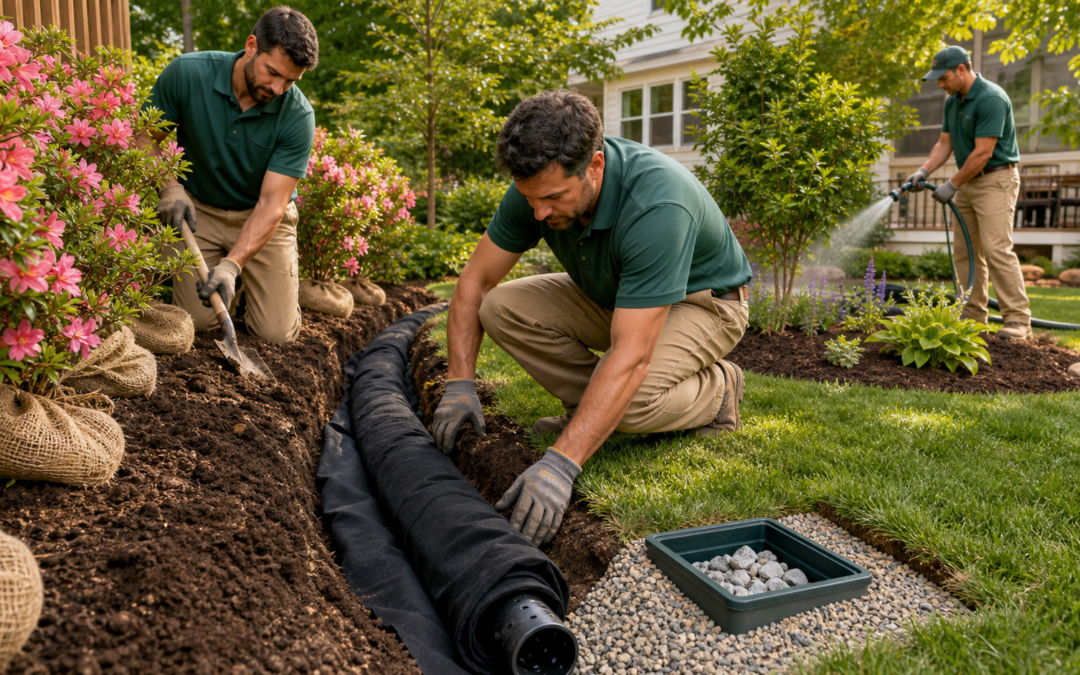
Instead of wide, rough trenches, we plan narrow runs that follow the best path for water with the least disturbance. Around sensitive roots, we often hand-dig and adjust routes to protect tree health. Where turf must be opened, we carefully cut, roll back, and later relay it so the lawn looks untouched after it heals.
A thoughtful retrofit also looks for ways to use the systems you already have. Sometimes we can tie new drains into existing downspouts or extend old lines to better outlets. Reworking a swale or slight grade can improve water flow without major construction.
This kind of planning helps keep your property looking finished and refined through the project, instead of like a construction site.
French Drains, Dry Creek Beds, and Catch Basins Done Right
Most luxury drainage retrofits use a mix of three main tools, each with its own job.
French drains are hidden helpers. They are trenches with perforated pipe, wrapped in gravel and fabric, that collect water in the soil and carry it away underground. They are great for:
- Soggy lawn strips along pool decks or patios
- Low spots where turf never dries out
- Areas where surface drains would be in the way
Dry creek beds are the pretty problem-solvers. These are shallow, stone-lined channels on the surface that guide runoff along a planned path. Done well, they look like natural features, not “drains.” Common uses include:
- Side yards that collect water from neighboring properties
- Narrow spaces between homes and fences
- Transitions between lawn areas and wooded or natural zones
Catch basins are small collection points with grates that pull surface water into underground pipes. You can place them in:
- Turf low spots that puddle after storms
- Corners of driveways or parking areas
- Downspout discharge areas near the house
For a high-end property, details matter. Stone in a dry creek bed should coordinate with existing rockwork or pool coping. Catch basin grates can be chosen to blend into turf or align with bed edges. Grades are shaped so lawns and garden contours still feel natural, not flattened or choppy.
The real magic happens when these systems are combined. A dry creek bed might start at a catch basin near a downspout, then feed into a French drain that quietly moves water away from your home and toward a safe discharge point. The result is layered water drainage for my home that works hard but stays out of sight, or even becomes part of the overall design.
Protecting Roots, Patios, and Plantings During Installation
Drainage work around a mature estate is as much about what you protect as what you install. Before we ever dig, we map out:
- Irrigation lines and valves
- Low-voltage lighting and wires
- Utility locations
- Tree root zones and drip lines
- Edges of patios, driveways, and other hardscapes
With mature trees and shrubs, we treat root zones with care. We stay outside key structural root areas when possible, adjust pipe paths around major roots, and use hand tools or air tools in sensitive zones. The goal is long-term plant health, not just short-term water control.
Surfaces also get special attention. Where drains must run under pavers, we lift and stack them, install the system, then relay them in the original pattern. Turf is cut cleanly and patched back, so seams soften over time. Hard surfaces like driveways and walkways are protected from equipment, and beds are cleaned, edged, and re-mulched once work is complete.
Seasonal timing matters too. In our warm climate, late spring through early fall is a strong window for lawns and plantings to recover quickly from any disturbance. Planning the work around pool season, holiday events, and big gatherings helps keep your outdoor life running smoothly while your drainage is upgraded.
Plan Your Lafayette Drainage Upgrade with Confidence
If you suspect water issues, one of the best first steps is a simple walk after a rain. Take photos and short notes of:
- Puddles and soft spots
- Erosion channels and washed-out mulch
- Wet corners by foundations or crawl spaces
- Any damp smells indoors that show moisture nearby
Those details help guide a professional evaluation. A thoughtful drainage review should look at grades, flow paths, soil, and the health of your existing trees and plantings. From there, you can see a phased plan that fits your long-term outdoor goals, not just a quick fix for the next storm.
Done right, drainage is not just a bandage. It is a hidden asset that protects your foundation, preserves mature plantings, keeps outdoor rooms more comfortable, and supports the overall value of your estate. When water drainage for my home works quietly in the background, you get to enjoy your property the way it was meant to be used, through long sunny days, evening gatherings, and every summer storm that rolls through.
Get Started With Your Project Today
If you are searching for effective water drainage for my home, we are ready to design a solution that protects your property and enhances your landscape. Our team at EdenScapes will evaluate your yard, identify problem areas, and create a plan tailored to your home’s unique needs. Reach out today to schedule a consultation or contact us with any questions about your next outdoor project.