

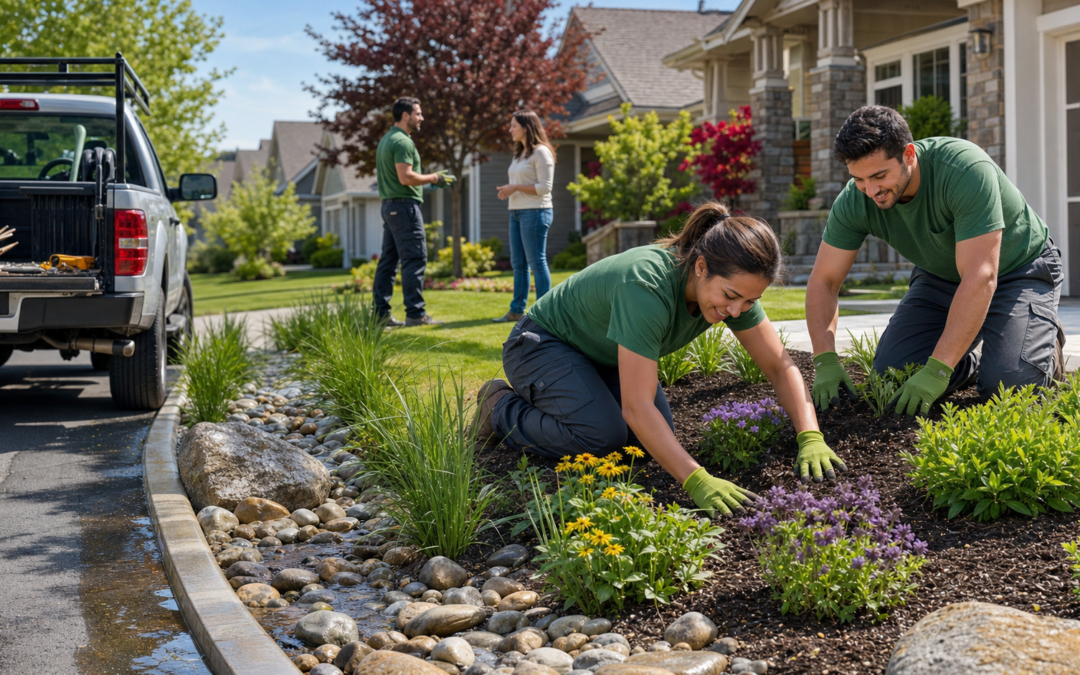
Transform Heavy Rain Into a Landscape Asset
Heavy Gulf storms can be hard on a large Lafayette property. Water sheets off big roofs and wide driveways, then sits on heavy clay soil that already feels soaked. Lawns stay soggy, beds stay muddy, and roots start to struggle.
Rain-gardens and bioswales flip that script. Instead of rushing straight to the street or toward your foundation, stormwater gets captured, slowed down, filtered, and then allowed to soak in or be stored for later use. The same rain that once flooded your courtyard can help feed your gardens.
At EdenScapes, we design smart landscapes that treat water like a design material, not a problem to push away. In this guide, we will walk through how rain-gardens and bioswales work, where they fit on an estate property, and how they can help future-proof your home for hurricane season and those sudden spring cloudbursts.
Why Lafayette Estates Need Smarter Stormwater Design
Around Lafayette, big downpours arrive fast, especially late spring through summer. Many estates sit on flat or gently sloped lots with clay soil that drains slowly. Add in large house footprints, long driveways, and patios, and you get a lot of hard surface that sends water racing toward low spots.
That is when the headaches start:
- Flooded courtyards and entry walks
- Lawns that squish under your feet days after a storm
- Erosion lines along driveways, fences, and property edges
- Mulch washing out of beds and into drains
- Planting areas that never really dry out between rains
Smart landscapes stack drainage tools instead of relying on a single fix. A typical upscale property may use a mix of:
- Subsurface drains to move water away from structures
- Gentle grading to guide water where it is safe
- Rain-gardens to collect and soak up roof and patio runoff
- Bioswales to move and filter larger flows along driveways and property lines
When all of these pieces work together, you lower flood risk, protect your hardscapes, keep roots healthier, and protect the long-term value of your outdoor investment.
How Rain-Gardens and Bioswales Actually Work
A rain-garden is a shallow, planted basin, usually set a bit lower than the surrounding ground. It collects water from downspouts, patios, or small courtyards, holds it for a short time, then lets it soak into improved soil. The plants in the basin are chosen to handle both short wet periods and dry stretches.
A bioswale is more like a wide, shallow, planted ditch, but far better looking. It is a gently sloped channel that guides water from one area to another while slowing it down and filtering it through soil and roots before it exits.
Here is what both features are doing in simple terms:
- Slowing water so it does not cut channels or flood entries
- Spreading water over a larger area so the soil can accept more
- Improving infiltration by mixing in compost and sand where needed
- Trapping sediment and everyday pollutants in the soil and plant roots
Digging a random hole in the yard is not the same as a true rain-garden. Professional design looks at:
- How much roof and hard surface drains to that spot
- How quickly your soil actually absorbs water
- Any high water table or drainage easements to respect
- Safe overflow routes so one big storm does not send water toward your house or your neighbor
That planning keeps you from trading one problem for another.
Designing for Lafayette Soils, Slopes, and Architecture
On a large estate, stormwater design starts with careful observation. We walk the property, study how water currently moves off roofs, driveways, and patios, and note every low spot and erosion path. We also check soil structure and how quickly test areas drain after water is added.
Because Lafayette soils often have a lot of clay, we adjust designs so they actually work in real life. That can include:
- Deeper, amended basins that mix clay with compost and other materials
- Longer bioswales to give water more distance and time to soak in
- Subtle berms to keep water away from foundations and pool decks
- Stone outfalls where fast-moving water enters a feature to prevent washouts
Our goal is to make these systems feel like they belong with your architecture. Near the house, that may mean more formal planting lines, stone or brick detailing, and neat edges that match upscale Lafayette homes. Farther from the house, we may soften into a more natural look, with flowing shapes and native-style plant groupings that blend into the property edges.
Planting Palettes and Materials That Elevate Curb Appeal
Plants are the engine of any good rain-garden or bioswale. In our climate, they need to handle both short-term flooding and stretches of summer heat without constant babying. We look for:
- Deep root systems that help break up tight soil
- Tolerance for wet feet after storms and drier periods between rains
- Compatibility with local wildlife, pollinators, and birds
- Good structure so the area looks attractive all year
Instead of a full species list, think in groups that work well together:
- Ornamental grasses that add movement and roots that grab soil
- Native sedges that love damp conditions and fill in tough spots
- Moisture-loving perennials for color, texture, and pollinator support
- Structural shrubs that frame the space and give it height
The right materials help these features look like high-end design, not just drainage. Common choices include:
- River rock to slow flow and add texture around inlets and outlets
- French drains and decorative grates to quietly move water where needed
- Boulder accents that look natural and protect curves from erosion
- Steel or stone edging to keep shapes crisp and contain mulch or rock
Done well, a rain-garden can be the prettiest bed on the property, not the one you try to hide.
Integrating Smart Landscapes, Reuse, and Seasonal Planning
Stormwater features really shine when they connect to other smart landscape tools. Rain sensors and soil moisture sensors can talk to app-based irrigation controllers so your system knows when recent storms have already done the watering for you. That helps avoid soggy roots and fungus problems.
On many estates, we also plan for capture and reuse. Overflow from rain-gardens or bioswales can be routed to:
- Underground cisterns that store water out of sight
- Above-ground decorative tanks that double as garden features
From there, stored rainwater can feed drip irrigation for garden beds, accent lawns, or container plantings during dry spells. You get a more self-balanced property that uses less municipal water and keeps plants healthier with softer, natural rainwater.
Timing matters too. Late spring is a smart window to install or upgrade rain-gardens and bioswales before the heart of hurricane season and late-summer storms. Once in place, these systems work all year:
- Spring, they buffer sudden deluges and protect young growth
- Summer, their deep-rooted plants handle heat and lower the strain on irrigation
- Fall, they capture nutrient-rich leaf litter and keep drains clearer
Maintenance is straightforward when the system is designed well. That usually means a few checks a year to clear inlets and outlets, refresh mulch or rock where needed, and trim or divide plants so they stay full and tidy.
Thoughtful planning now also keeps future projects in sync. When we design drainage, we consider possible additions like pools, outdoor kitchens, and holiday lighting displays. Conduits, wiring, and hardscapes are placed so they work with water flow patterns instead of blocking them or creating new low spots that flood during the next big storm.
Transform Your Yard With Smart, Time-Saving Design
If you are ready to upgrade your outdoor space into something beautiful, efficient, and easy to maintain, our team at EdenScapes is here to help. We specialize in designing smart landscapes that work with your property, your lifestyle, and your long-term goals. Let us know what you envision, and we will guide you through the next steps, from concept to final plan. Have questions or want to talk through options first? Just contact us and we will respond promptly.